
Imagine twirling forkfuls of perfectly al dente pasta coated in a stunning magenta sauce that’s naturally sweet, earthy, and luxuriously creamy—all from roasted beets blended with tangy goat cheese. The vibrant color pops on the plate, the texture shifts between silky sauce and tender bites of beet, and a fresh sprinkle of herbs and toasted walnuts adds the perfect crunch. This Beet and Goat Cheese Pasta – Vibrant, Creamy Vegetarian Dinner feels like something you’d order at a trendy bistro, yet it comes together with minimal active effort and delivers restaurant-quality results every single time.

Whether you’re cooking for a date night, feeding the family on a busy weeknight, or looking for a show-stopping vegetarian main that even meat-lovers rave about, this dish checks every box. Let’s walk through exactly why it works so beautifully, how to achieve that dreamy creamy texture and vibrant flavor, smart variations for every dietary need, and pro tips that take it from good to unforgettable.
Why This Beet and Goat Cheese Pasta Works So Brilliantly
The secret is in the dual role of the beets. Roasting concentrates their natural sugars and creates caramelized edges that bring deep, sweet-earth flavor without any bitterness. Once cooled slightly, half the beets get blended into a smooth puree with creamy goat cheese, olive oil, and a splash of pasta water. This technique creates an emulsified sauce that coats every strand beautifully—no flour or thickeners needed. The goat cheese is the differentiating ingredient here: its tangy, slightly crumbly nature transforms into a rich, luxurious sauce when warmed by the hot pasta, while the beets provide natural color and body.
Science plays a supporting role too. The natural starches released from the pasta during cooking help the sauce cling, and the acid from lemon juice brightens the earthiness so the dish never feels heavy. The result is a pasta that looks vibrant on the plate, tastes balanced in every bite, and delivers that perfect creamy-yet-light texture everyone craves in a vegetarian dinner.
Essential Ingredients and How to Choose Them for Best Results
Success starts with fresh, quality components—each one chosen to maximize color, creaminess, and flavor:
- Beets (1½ pounds, about 4 medium): Red beets give the most stunning magenta hue. Choose firm, smooth ones with bright greens still attached if possible—they’re freshest.
- Goat cheese (8 ounces, soft log or crumbled): Full-fat goat cheese is key for creaminess and tang. Avoid pre-crumbled varieties with stabilizers for the smoothest sauce.
- Pasta (12 ounces): Fettuccine or linguine are ideal because their flat ribbons catch every bit of sauce. Penne works beautifully too for a heartier bite.
- Extra-virgin olive oil (¼ cup plus extra for roasting): A fruity oil carries the beet and garlic flavors and helps create silky texture.
- Garlic (3 cloves) and fresh thyme (2 sprigs): These add savory depth while roasting and in the sauce.
- Lemon (1 large): Zest and juice brighten the entire dish and balance the earthiness.
- Kosher salt, freshly ground black pepper, and optional crushed red pepper flakes: Proper seasoning brings everything into focus.
- Baby arugula or spinach (2 cups) and toasted walnuts (⅓ cup, optional): Added at the end for peppery freshness and crunchy texture.
- Reserved pasta water: The unsung hero that loosens and emulsifies the sauce perfectly.
Step-by-Step Instructions for Beet and Goat Cheese Pasta – Vibrant, Creamy Vegetarian Dinner
Step 1: Roast the beets
Preheat your oven to 400°F. Trim and scrub 1½ pounds beets, cut into ½-inch wedges, and toss with 2 tablespoons olive oil, 2 sprigs fresh thyme, ½ teaspoon salt, and ¼ teaspoon black pepper. Spread on a parchment-lined baking sheet and roast for 35–45 minutes until fork-tender and caramelized at the edges. Let cool slightly, then peel (the skins slip off easily after roasting).
Step 2: Cook the pasta
While the beets roast (or use pre-roasted beets for faster prep), bring a large pot of generously salted water to a boil. Cook 12 ounces fettuccine or linguine until just al dente—usually 1–2 minutes less than the package suggests. Before draining, reserve ¾ cup pasta cooking water. Drain the pasta but do not rinse.
Step 3: Make the vibrant beet sauce
Place half the roasted beets (about 2 cups) in a blender or food processor with 8 ounces goat cheese, ¼ cup olive oil, 3 minced garlic cloves, zest and juice of 1 lemon, ½ teaspoon salt, ¼ teaspoon black pepper, and ¼ cup reserved pasta water. Blend on high until completely smooth and creamy, about 30–45 seconds. The sauce should be thick but pourable—if too thick, add another splash of pasta water.
Step 4: Combine everything
In the still-hot pasta pot or a large bowl, add the beet sauce to the drained pasta. Toss vigorously over low heat for 1–2 minutes so the sauce warms through and clings to every strand. Gently fold in the remaining roasted beet wedges, 2 cups baby arugula or spinach, and ⅓ cup toasted walnuts (if using). The residual heat will wilt the greens just enough while keeping their freshness.
Step 5: Finish and serve
Taste and adjust seasoning—add more lemon juice for brightness or pasta water for silkiness. Divide into warm bowls, crumble extra goat cheese on top, scatter a few more walnuts and arugula leaves, and finish with a drizzle of olive oil and fresh cracked black pepper. Serve immediately while the contrast of warm pasta and cool, tangy cheese is at its peak.
Pro Tips for Achieving Ideal Texture and Flavor Every Time
The difference between good and exceptional Beet and Goat Cheese Pasta lies in a few key techniques. Roast the beets until they’re deeply caramelized—the edges should be slightly crispy while the centers stay tender. This concentrates sweetness and prevents a watery sauce. Always reserve plenty of pasta water; the starchy liquid is what turns the blended beets and goat cheese into a glossy, restaurant-style emulsion.
Use room-temperature goat cheese so it blends smoothly without lumps. Blend the sauce until it’s velvety—any remaining beet bits will create a rustic texture that’s still delicious, but a silky puree gives the most vibrant, creamy result. For extra flavor, roast the garlic cloves alongside the beets so they mellow and become sweet. Taste the finished dish right before serving—the beets can absorb seasoning as they sit, so a final squeeze of lemon and pinch of salt often elevates everything.
Smart Variations and Easy Substitutions
This Beet and Goat Cheese Pasta – Vibrant, Creamy Vegetarian Dinner is wonderfully adaptable while staying true to its colorful spirit:
Gluten-Free Version
Swap the pasta for your favorite gluten-free fettuccine or penne. Cook according to package timing (often slightly longer) and be extra generous with pasta water—gluten-free noodles sometimes need more liquid to stay silky as they cool.
Vegan Adaptation
Replace the goat cheese with a creamy vegan alternative (such as cashew-based goat cheese style) or ¾ cup soaked cashews blended with 2 tablespoons nutritional yeast, lemon juice, and salt. The roasted beets still deliver stunning color and natural sweetness. Add an extra tablespoon of olive oil for richness.
Higher-Protein Boost
Toss in 1 can of drained chickpeas or 1 cup cooked white beans when you add the greens. For even more protein, stir in ½ cup cooked quinoa or crumbled firm tofu. The earthy beets pair beautifully with these additions.
Nut-Free Option
Skip the walnuts entirely or replace with toasted sunflower seeds or pumpkin seeds for the same satisfying crunch. The base recipe is already nut-free when made this way.
Extra Vegetable Twist
Fold in 2 cups sautéed mushrooms or roasted butternut squash cubes along with the beet wedges for more hearty texture and color contrast. Baby spinach can replace arugula if you prefer a milder green.
Herb Variations
Swap thyme for fresh rosemary during roasting or finish with chopped fresh dill or chives for a different aromatic lift while keeping the vibrant spring feel.
These easy swaps maintain the creamy, colorful character that makes the original so special and accommodate almost any dietary preference or pantry situation.
What to Serve Alongside for a Complete Vegetarian Meal
This Beet and Goat Cheese Pasta – Vibrant, Creamy Vegetarian Dinner shines as a standalone main course. Pair it with a simple side salad of mixed greens dressed in lemon and olive oil to echo the brightness. Warm crusty bread or garlic bread is perfect for swiping up any extra sauce. For beverages, chilled sparkling water with fresh lemon slices or a homemade herbal iced tea keeps the meal refreshing and balanced. It also makes an elegant starter before grilled vegetables or a cheese board for vegetarian entertaining.
Storage, Make-Ahead Tips, and Leftovers
The roasted beets can be prepared up to 3 days ahead and stored in the refrigerator—simply reheat gently or use them cold. The finished pasta is best enjoyed immediately while the sauce is at its creamiest, but leftovers keep surprisingly well. Store in an airtight container in the refrigerator for up to 3 days.
To reheat, warm gently in a skillet over low heat with a splash of water or milk to loosen the sauce, stirring until creamy again. The vibrant color may soften slightly, but the flavor actually improves as the beets continue to meld with the goat cheese. Cold leftovers also make a delicious pasta salad straight from the fridge with an extra squeeze of lemon to brighten everything.
Frequently Asked Questions
Can I use pre-cooked beets to save time?
Absolutely. Store-bought steamed or vacuum-packed beets work beautifully—just skip the roasting step and proceed with the sauce. The color and flavor will still be vibrant.
What if my sauce seems too thick?
Add reserved pasta water 1 tablespoon at a time while tossing over low heat until it reaches a silky, glossy consistency that coats the back of a spoon.
Can I make this ahead for guests?
Yes—roast the beets and blend the sauce up to 4 hours ahead. Cook the pasta right before serving and toss everything together at the last minute for the best texture and temperature contrast.
Is the goat cheese essential for creaminess?
It’s what gives the signature tangy creaminess, but the vegan adaptation above delivers excellent results if needed. The roasted beets provide natural body on their own.
This Beet and Goat Cheese Pasta – Vibrant, Creamy Vegetarian Dinner proves that vegetarian meals can be every bit as impressive and satisfying as their meat counterparts. The stunning natural color, silky texture, and balanced earthy-sweet-tangy flavor create a dish that feels both nourishing and indulgent—exactly the kind of recipe you’ll reach for again and again.
Ready to bring a little color and creaminess to your dinner table tonight? Grab fresh beets and quality goat cheese, print the recipe, and give it a try. I’d love to hear how yours turns out—drop a comment below with your favorite variation or any creative twists you added. If you loved the vibrant, creamy vibe, be sure to explore our other easy vegetarian pasta recipes and colorful vegetable-forward dinners for more inspiration. Rate this recipe five stars if it becomes your new go-to, share it with friends who need beautiful weeknight meals, and pin the gorgeous finished dish for later. Happy cooking—your dinner just got a whole lot more vibrant!
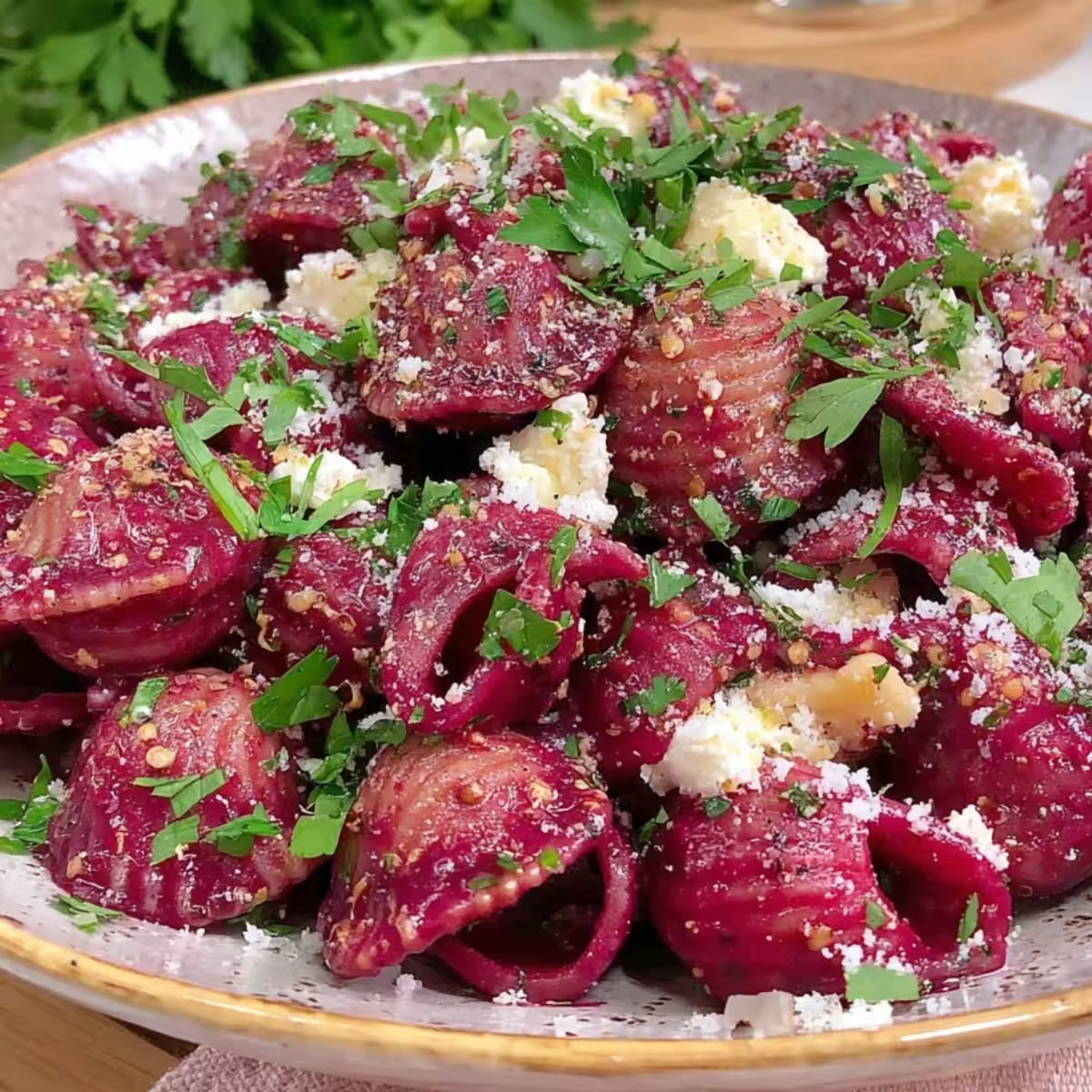

Beet and Goat Cheese Pasta – Vibrant, Creamy Vegetarian Dinner
Ingredients
Equipment
Method
- Preheat oven to 400°F. Toss beet wedges with 2 tablespoons olive oil, thyme, salt, and pepper. Roast 35-45 minutes until tender and caramelized.
- Cook pasta in salted boiling water until al dente. Reserve ¾ cup pasta water, then drain.
- Blend half the roasted beets with goat cheese, olive oil, garlic, lemon zest and juice, salt, pepper, and ¼ cup pasta water until smooth and creamy.
- Toss hot pasta with beet sauce over low heat, adding remaining pasta water as needed for silky texture. Fold in remaining beet wedges, arugula, and walnuts.
- Serve immediately topped with extra crumbled goat cheese, walnuts, arugula, and a drizzle of olive oil.