
There is something truly magical about pulling a loaf of bread from the oven where a crackling, caramel-colored crust gives way to a soft, tangy interior studded with pockets of burst, juicy blueberries and brightened by the sunshine essence of lemon. This Vibrant Blueberry Lemon Sourdough is a celebration of contrasts—sweet and tart, hearty and fruity, rustic and elegant. While this artisanal loaf may look like it came from a professional bakery, the process is beautifully straightforward. This guide will demystify sourdough baking with fruit, offering foolproof techniques to ensure a light, open crumb and perfectly distributed berries in every single slice. Let’s create a loaf that’s as joyful to make as it is to eat.
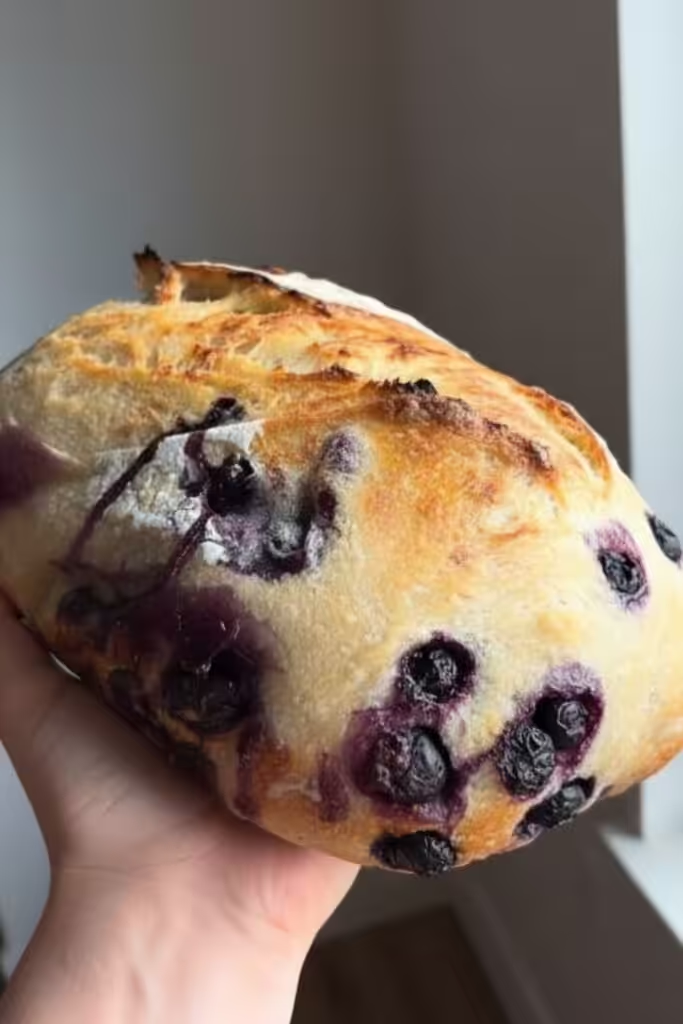
The Alchemy of Fruit and Fermentation: Core Baking Principles
Successfully baking a sourdough loaf packed with fresh fruit hinges on understanding a few key interactions. The goal is to protect the delicate structure of the dough while welcoming the moisture and flavor of the berries.
- The Starter: Heart of Flavor and Rise. Your active, peak sourdough starter is the engine of this recipe. It should be bubbly, vigorous, and have a pleasant, tangy aroma after its last feeding. A strong starter ensures robust fermentation, giving the dough the power to rise around the heavy berries and develop that desirable complex, tangy flavor.
- Mastering Moisture for Perfect Texture. Fresh berries are mostly water. If added carelessly, they can release too much liquid during baking, creating dense, gummy streaks in your crumb. The solution is a simple two-fold preparation: thoroughly drying the berries after washing and giving them a light dusting of flour. This coating helps absorb surface moisture and allows the berries to “grip” the dough, preventing them from sinking to the bottom during proofing.
- Lemon’s Dual Role: Brightness and Strength. Lemon does more than just add a zesty, fresh flavor. The finely grated lemon zest introduces potent citrus oils directly into the dough. A small amount of fresh lemon juice slightly increases the dough’s acidity. This can actually help strengthen the gluten network during mixing and folding, resulting in a better oven spring and more resilient dough structure to hold the fruit.
The Gentle Art of Handling Enriched Dough
Incorporating delicate fruit into a fragile, airy sourdough matrix requires a specific technique. The process is all about building strength early and adding the berries with a light touch at the perfect moment.
Table: The Sourdough with Fruit Timeline
| Stage | Primary Goal | Key Visual & Tactile Cues |
|---|---|---|
| Levain Build (4-6 hrs) | Activate starter for peak leavening power. | Mixture becomes domed, bubbly, and passes the float test. |
| Autolyse & Mix (30-60 min) | Hydrate flour and initiate gluten. | Shaggy dough becomes more cohesive and smoother. |
| Bulk Fermentation (4-5 hrs) | Develop dough strength and flavor. | Dough becomes smooth, elastic, and increases 30-50% in volume. |
| Berry Incorporation (Final 30 min) | Distribute fruit without deflating structure. | Berries are nestled in; dough remains airy and full of gas. |
| Shape, Proof & Bake (Overnight + 1 hr) | Final rise, flavor development, and oven spring. | Dough holds its shape, springs back slowly when poked, bakes with a glorious burst. |
Master Recipe: Vibrant Blueberry Lemon Sourdough
This recipe yields one spectacular round loaf (boule). For best results, view it as a relaxed two-day process.
Ingredients
For the Levain (Build this 4-6 hours before mixing dough):
- 30g active sourdough starter
- 60g warm water (about 85°F/29°C)
- 60g bread flour
For the Main Dough:
- All of the prepared levain (approx. 150g)
- 350g warm water
- 500g bread flour (high-protein preferred)
- 10g fine sea salt
- Zest of 2 large lemons
For the Berry Preparation:
- 200g fresh blueberries, rinsed and thoroughly patted dry
- 1-2 tablespoons bread flour (for coating)
For the Lemon Glaze (Optional):
- 3 tablespoons powdered sugar
- 1 teaspoon fresh lemon juice
- 1/2 teaspoon milk or water (to adjust consistency)
Equipment
- Digital kitchen scale
- Bench scraper
- Round proofing basket (banneton)
- Dutch oven
Day 1: Building Flavor and Structure
- Build the Levain: Combine the 30g starter, 60g water, and 60g flour in a jar or bowl. Stir well, cover, and let sit at room temperature for 4-6 hours until it is at least doubled in size, bubbly, and active. It should pass the “float test” (a small spoonful dropped in water floats).
- Autolyse: In a large mixing bowl, combine the 350g warm water and all of the ripe levain. Stir with a whisk or fork to disperse and mostly dissolve the levain. Add the 500g bread flour. Mix with a spatula or your hands until no dry flour remains. The dough will be shaggy. Cover and let rest for 45 minutes to 1 hour. This autolyse allows the flour to fully hydrate, making the dough easier to work with and improving its final texture.
- Mix the Dough: After autolyse, sprinkle the 10g salt and lemon zest over the dough. Wet your hand to prevent sticking, and pinch and fold the dough to incorporate the salt and zest completely. It will feel wet and messy at first, then will become more cohesive.
- Bulk Fermentation & Folds: This is the crucial dough development phase. Over the next 4 to 5 hours at room temperature, perform 4-6 sets of “stretch and folds.” Do the first set immediately after mixing, then subsequent sets every 30-45 minutes. To perform a set, wet your hand, grab one side of the dough, stretch it gently upward, and fold it over the center. Rotate the bowl and repeat 3-4 more times until you’ve gone around the bowl. You will feel the dough transform from loose and sticky to strong, smooth, and elastic. It should rise by about 30-50%.
- Incorporate the Blueberries (The Final Fold): About 30 minutes before the end of bulk fermentation, prepare your berries. In a small bowl, toss the thoroughly dried blueberries with 1 tablespoon of flour until lightly coated. Gently pour the dough onto a very lightly floured surface. Using wet hands, pat and stretch it gently into a rough rectangle. Sprinkle the floured berries evenly over the surface. Fold the dough over the berries, then gently lift and fold sections until the berries are mostly incorporated. Be gentle to avoid crushing them and deflating the dough. Return the dough to the bowl for its final 30-minute rest.
- Shape & Cold Proof: Lightly flour your banneton. Gently turn the dough out onto a non-floured surface (the tackiness helps create surface tension). Shape it into a tight round. Place it seam-side up into the floured banneton. Place the entire basket inside a reusable bag or cover loosely with plastic. Refrigerate immediately for 12-16 hours (overnight). This cold proof deepens the flavor and firms up the dough for easier scoring and baking.
Day 2: Baking Your Masterpiece
- Preheat: Place your Dutch oven (with lid on) in the center of your oven. Preheat to 500°F (260°C) for at least 45 minutes. This ensures a powerful burst of heat and steam.
- Score the Dough: Carefully remove the cold dough from the refrigerator. Place a piece of parchment paper over the banneton, then invert everything so the dough lands seam-side down on the paper. Using a sharp razor blade or lame, make one confident, deep slash (about ½ inch) across the top. This controls where the bread expands.
- Bake with Steam: Using the parchment as a sling, carefully lower the dough into the scorching-hot Dutch oven. Cover with the lid. Reduce oven temperature to 450°F (230°C) and bake for 20 minutes.
- Finish for Color: After 20 minutes, remove the lid. The loaf should be pale but have puffed up beautifully (oven spring). Continue baking, uncovered, for another 20-25 minutes, or until the crust is a deep, rich golden brown and the internal temperature reaches at least 208°F (98°C).
- Glaze & Cool Completely: If using the lemon glaze, whisk the powdered sugar and lemon juice, adding just enough milk/water for a thick but drizzle-able consistency. As soon as the loaf comes out of the oven, brush or drizzle the glaze over the top for a sweet, shiny finish. Transfer the bread to a wire rack and let it cool completely—for at least 4 hours—before slicing. This patience is critical for the crumb to fully set.
Creative Variations & Adaptations
This recipe is wonderfully adaptable. Here’s how to make it your own.
Flavor & Dietary Twists
- Lemon-Thyme Blueberry Sourdough: For an herbal note, add 1 tablespoon of finely chopped fresh thyme leaves along with the lemon zest.
- Vegan Version: The base recipe is already vegan. For the optional glaze, use a simple lemon-water icing (powdered sugar mixed with just lemon juice) or omit it entirely.
- Gluten-Free Adaptation: Substitute the bread flour with a high-quality 1:1 gluten-free bread flour blend that contains xanthan gum. Expect a slightly denser texture and handle the dough more carefully, as it will be more like a thick batter. Baking in a lined loaf pan is recommended.
- Mixed Berry Medley: Substitute half the blueberries with an equal weight of raspberries or blackberries. Frozen berries can be used without thawing; coat them directly in flour while frozen.
Smart Ingredient Substitutions
- Flour: Substitute up to 100g of the bread flour with whole wheat flour or rye flour for a deeper, earthier flavor. You may need to add 10-15g more water.
- Berries: Dried blueberries or cranberries (soaked in hot water for 10 minutes and patted dry) are excellent year-round options and reduce moisture concerns.
- Citrus: Orange or grapefruit zest offers a delightful variation. For a unique twist, use Meyer lemon for a sweeter, less acidic profile.
Pro Tips for Storage & Success
- Storage: For the best texture, store the completely cooled loaf cut-side down on a wooden board for 1-2 days. For longer storage, place it in a paper bag (to keep the crust crisp) inside a plastic bag (to prevent drying) for up to 5 days. It freezes perfectly for up to 3 months.
- The “Secret” for Even Berry Distribution: Incorporate the berries during the final set of stretch and folds in the bowl, rather than on the counter. This is gentler on the dough’s structure and helps prevent the last-minute handling that can deflate precious gases.
- Ensuring a Crispy Crust: The initial high heat and the steam trapped by the Dutch oven lid are non-negotiable for that professional, blistered crust. Do not skip the preheating step.
- Troubleshooting a Dense Loaf: If your bread is too dense, the most common culprit is under-proofing. In your next bake, allow a longer bulk fermentation at room temperature, looking for that reliable 30-50% volume increase as your true guide, not just the clock.
This Vibrant Blueberry Lemon Sourdough, with its bursting fresh berries and sunny citrus notes, is a testament to the beautiful things that happen when patience meets creativity in the kitchen. Each slice is a reward.
What’s your favorite way to enjoy this tangy-sweet loaf? As toast with honey, or simply on its own? Share your baking triumphs, photos, and personal adaptations in the comments below—I read every one and love seeing your creations. If this fruited sourdough sparked joy, you might find your next challenge in my recipe for Seeded Honey & Oat Sourdough.
Happy baking, and may your crust always be crisp and your crumb always open!
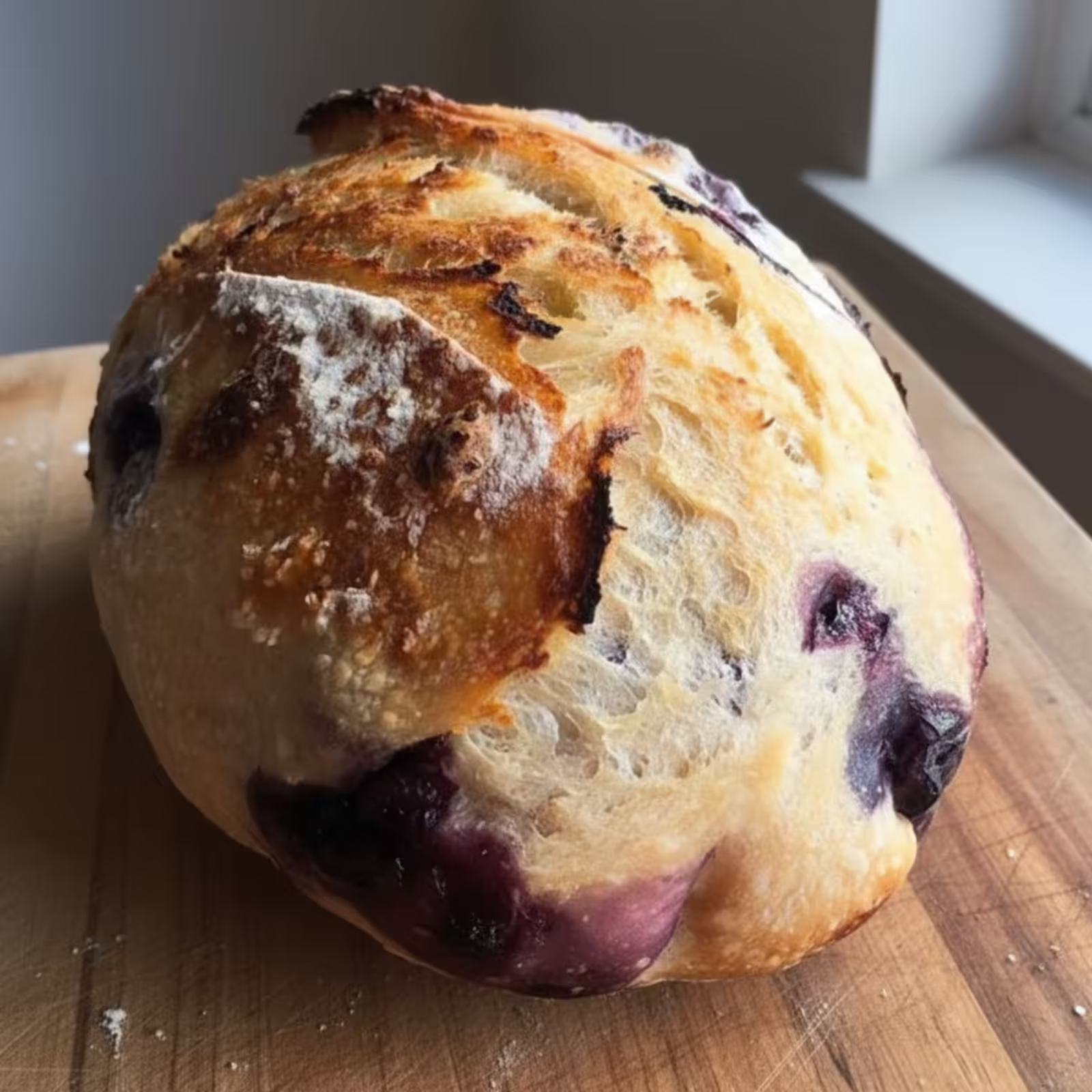

Vibrant Blueberry Lemon Sourdough
Ingredients
Equipment
Method
- Whisk water, starter, lemon juice, and honey in a large bowl. Add flour and mix until no dry spots remain. Let rest for 45 minutes.
- Add salt and lemon zest. Perform your first set of stretch and folds, pulling the edges of the dough toward the center until it tightens.
- During the second set of folds, gently laminate or fold in the blueberries. If you want a ‘vibrant’ purple swirl, press a few berries against the dough to release their juice.
- Continue 2 more sets of folds every 30 minutes. Let the dough rise in a warm spot until it doubles in size and looks bubbly (6-8 hours).
- Gently shape into a round boule. Place into a well-floured banneton. Cover and proof in the fridge for 12-24 hours.
- Preheat Dutch oven to 450°F. Score the loaf. Bake with the lid on for 25 mins, then lid off for 15-20 mins until deep golden and berries are ‘bursting’ through the crust.